I’ve loved horror and true crime for many years. It’s brought me an abundance of thrills and happiness. In lockdown, my friends took up baking and gardening, meanwhile I delved deeper and deeper into the world of disturbing cinema.
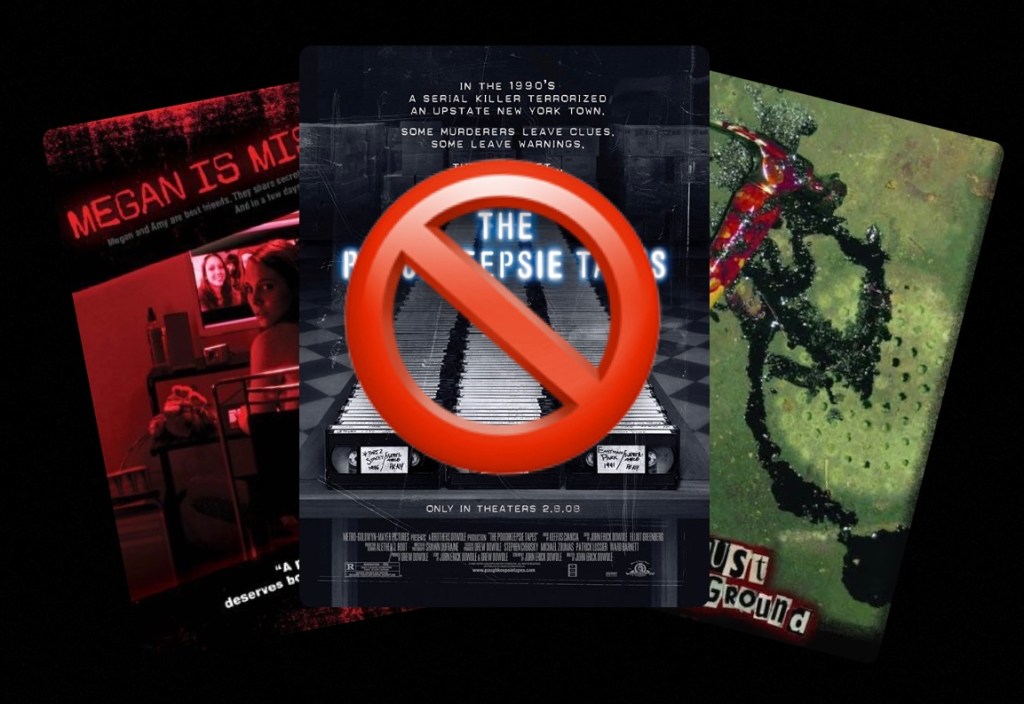
Of course, I didn’t just dive down to the depths of the disturbing iceberg straight away, I worked my way down. As the films became more controversial and harder to come across – so did the watch. I started with films that were relatively tame (in my opinion, though I know others may disagree) such as Megan Is Missing (2011) and Tusk (2014) – two well-known movies in the horror community.
I became obsessed. I remember the adrenaline that came with watching movies that felt illicit – it was a rush. Even if the contents were horrifying, I somehow ended up seeking out more movies that would deliver the same effect. The issue being that I was slowly becoming desensitised to the trauma and violence onscreen. I was soon watching movies like The Poughkeepsie Tapes (2007) and Salo, or The 120 Days of Sodom (1975) – I was somewhat undaunted by the contents despite these movies being listed on almost every popular blog post regarding the most disturbing pieces of cinema of all time.
I can only describe it as an obscure addiction and morbid curiosity. I was struggling to find anything that would trigger that weird sicky rush I felt when I first started watching horror. Towards the end of the second lockdown, I was watching August Underground’s Mordum (2003) and hunting down the Guinea Pig series – undoubtedly some of the most f*cked up movies you can find without breaking any laws.
The repeated exposure to graphic depictions of death, gore, and torture seem to have little to no effect on me. I slept soundly each night and rarely thought about what I’d seen onscreen after I switched it off – but the effects were manifesting in other ways that I wasn’t initially aware of:
- I developed a “compulsive viewing” disorder – I was watching anything and everything that was classified as an 18 (British Board of Film Classification) or had content warnings of violence, gore, and triggering subjects – the more the better! So I was sticking on random ass movies, one after the other, and wondering why they were all terrible and couldn’t hold my attention for more than five minutes. Had I taken just a little more time to research films and focus on quality over quantity, I would have had far more enjoyable movie experiences and not lost my passion for horror.
- I didn’t like “normal” horror anymore – when I say normal, I’m referring to film series such as The Conjuring and Paranormal Activity. These were (and still are) some of my favourite horrors, and they don’t rely on extreme violence or grotesque gore in order to deliver scares. Once I became so desensitised to the graphic depictions in the disturbing genre, I simply stopped enjoying the films that made me jump into horror in the first place. That made me sad. I wanted to be buzzed about mainstream horror again and enjoy the tropes that worked so well for me in the past.
- I became desensitised to real-life violence – my emotional responses to real-life events became numb. I was so used to seeing extreme violence in these films that it bled into the real world. I began struggling with empathy and it had worrying affects on my mental health and ability to connect with others on an emotional level. Our brains were not designed to witness such gruesome and sadistic acts on film or in real life. It’s damaging – and it totally detached me from reality, it was terrifying.
- Disturbing cinema relies on harmful stereotypes – Sadly, these types of films frequently depict women, people of colour, and other marginalised groups as victims and/or villains – perpetuating harmful stereotypes and reinforcing oppressive power structures in our society. So watching them can quietly contribute to internalised biases and negative beliefs that lead to real-world discrimination and harm! I’m not saying other film genres don’t don’t do this, but it’s certainly more prevalent in these kind of films.
And that’s why I have made the decision to give up disturbing films. Just because it doesn’t “disturb” you or trigger any kind of emotional reaction, doesn’t mean it’s not negatively affecting you in other ways. Be mindful of what you choose to watch and take care of yourself.
 @clogascoigne
Leave a comment